
Last updated on
12 December 2025
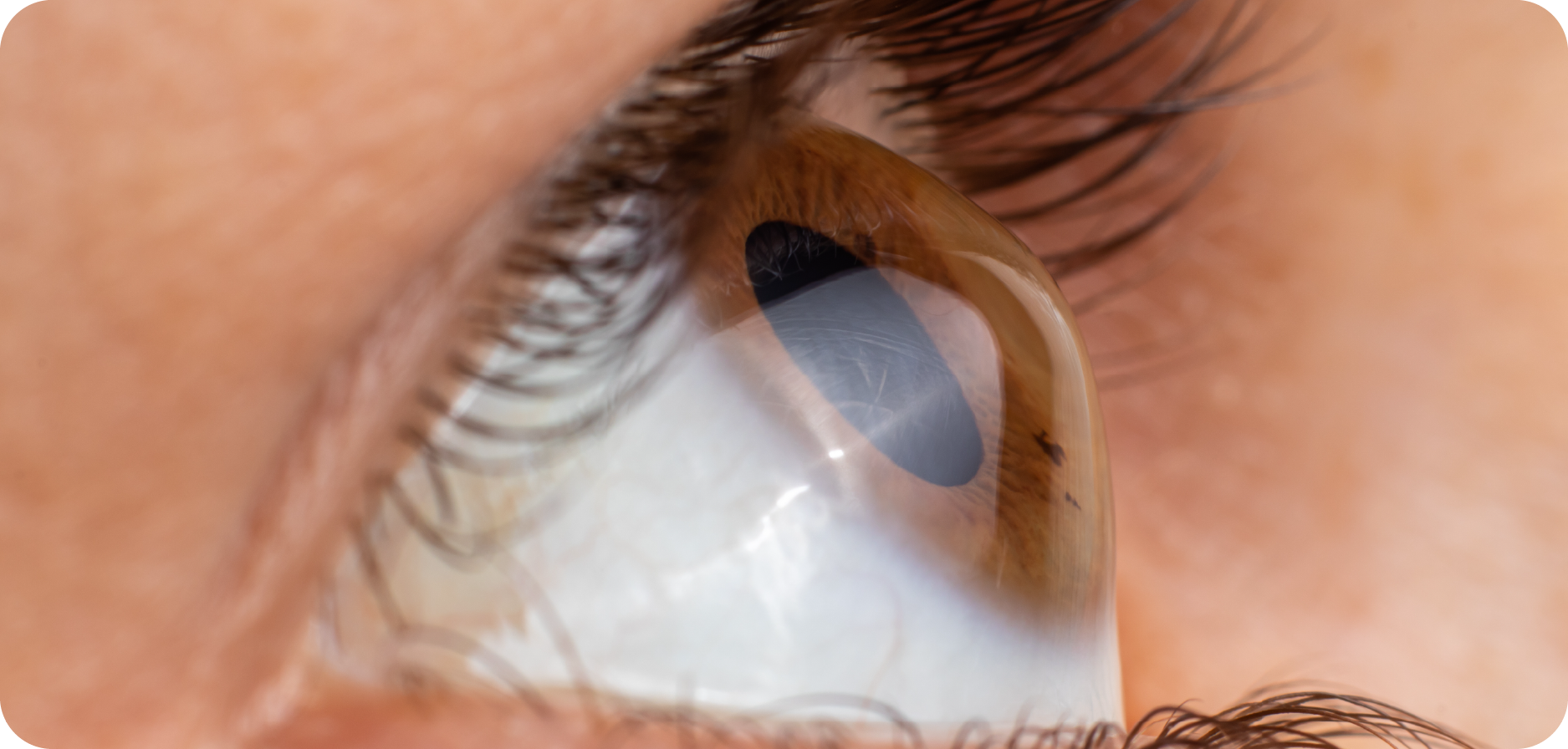
The cornea is the transparent front “window” of your eye. This dome-shaped structure covers the iris, the pupil, and the anterior chamber. It is also necessary for clear vision.
This is because the cornea serves as a lens that focuses light onto the light-sensitive tissue at the back of your eye, the retina. Aside from that, it serves as a shield against things like dust and germs for the delicate structures of the eye.
However, like all shields, the cornea itself is exposed and therefore vulnerable to damage. It can be scratched or even infected.
Cornea damage may be easy to set aside at first, but it can progress rapidly and may even lead to permanent scarring and vision loss. This is why people with a scratched cornea or some other issue are advised to seek medical attention as soon as possible.
In this article, we explain some of the chief causes and symptoms of corneal damage to help you differentiate between minor problems and ones that may require professional care.
Corneal damage refers to any disruption to the smooth and transparent surface of the cornea, or to its underlying structural integrity.
Sharp and focused vision requires this part of the eye to be clear and maintain a specific curvature or shape. Anything that damages it to change that can result in vision problems.
Corneal damage severity varies greatly, ranging from scratches that can quickly heal by themselves to deep wounds that may require surgery.

Most corneal issues can be categorised by their cause. Identifying the root cause is often the key to providing effective and prompt treatment to prevent permanent scarring or vision loss.

Some corneal problems can progress rapidly from minor irritations to vision-threatening ones. This means recognising early symptoms is crucial and can help you seek professional help as soon as possible.
Here are some signs that you need medical help:
The appropriate treatment for corneal damage depends on the type of damage, its cause, and its severity.
Most superficial damage to the outermost layer of the cornea will heal by itself in 24 to 72 hours. This is why management is chiefly about promoting comfort and preventing infection.
This may require the use of lubricating eye drops or antibiotic eye drops. A bandage contact lens may also be applied under ophthalmic supervision for comfort and to promote epithelial healing.
Eye patching is generally not recommended for corneal abrasions, as it can slow healing and increase infection risk.
Patients should also avoid touching the affected eye, even with contact lenses.
This is an emergent condition that merits immediate consultation with an eye specialist. Treatment will depend on the exact cause of the infection.
It often involves antibiotic eye drops for bacterial infections, antiviral medication for viral ones, or antifungal drops for fungal keratitis. Delaying treatment raises the risk of developing corneal ulcers or scars.

When vision is already severely impaired due to scarring or some other issue, surgical intervention may be necessary. This is generally considered only when other treatments have failed or have been found unsuitable.
Options include corneal transplants, lamellar keratoplasties, and corneal cross-linking. Learn more about these procedures on our corneal surgery services page.
In eye health, the difference between a mild problem and a sight-threatening one can be as small as a few hours of difference in the start of treatment. If you experience any of these, we recommend a professional evaluation as soon as possible:
Early intervention is the most effective way to prevent escalation of more easily treatable injuries into serious ones.

The cornea has surprising regenerative ability for its outermost layer. However, this ability to heal itself is limited in its deeper layers.
Once significant scarring sets in those parts, the opacity can usually be corrected only by surgery. Delaying treatment for even a day may transform a condition from one that could have been resolved by eye drops into one that significantly impairs your vision.
An example is a minor corneal scratch. If treated incorrectly or allowed to develop into an infection, it can lead to a permanent scar on the cornea.
The risk is especially high for contact lens wearers due to the constant contact with the cornea and the possibility of hygiene lapses leading to infections.
The cornea is a delicate but essential component of the visual system. Without it, clear sight is not possible.
This means that caring for the cornea is vital if one wishes to protect one’s vision. If you believe that you have one of the symptoms we noted above, seek an expert assessment before symptoms worsen.
You can also seek an appointment with one of our eye doctors at ERS Suntec City. We can provide you with a thorough examination and treatment recommendations based on your diagnosis.